News
Our stories ... ...
Ghana - 12 June, 2025
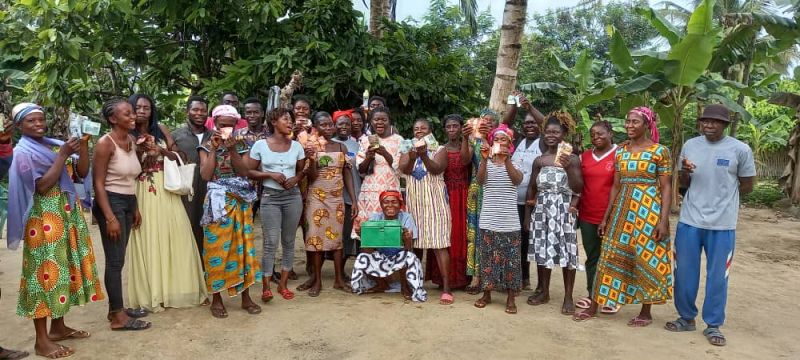
Ghanaian cocoa farmers are adopting agroforestry practices to strengthen their resilience. With the support of savings groups, they are now better equipped to invest in sustainable farming and secure their livelihoods.
In northwestern Ghana, cocoa farming is the main source of income. Yet many farming families still struggle to make ends meet. Their dependence on a single crop leaves them vulnerable to price swings and climate change. Over time, soils degrade and productivity drops, pushing farmers to expand into nearby forests. Diversifying cocoa farms with other trees, crops and livestock could help boost incomes, strengthen resilience, and ease pressure on the environment.
We have been working in the Sefwi-Wiawso and Juabeso-Bia landscapes - covering 481,000 hectares and home to nearly half a million people - to support sustainable and feasible cocoa farming. As part of the Working Landscapes (WL) programme, we brought together farmers, traditional leaders, cocoa companies, and government agencies to promote practices that integrate trees and additional crops into cocoa farms. As a result, key actors like the Ghana Cocoa Board and several cocoa firms integrated agroforestry in their programmes, and more farmers adopted these practices. One study found that between 2020 and 2022, tree cover increased by 25% across 2,000 hectares of cocoa farms.
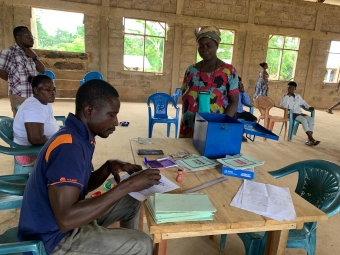
Although knowledge of and interest in sustainable cocoa agroforestry grew, it became clear that a lack of access to finance was a barrier to wider adoption. Agroforestry systems take years to yield returns, and most smallholders cannot afford to pay for the upfront costs. To help close this gap, we introduced Village Savings and Loan Associations (VSLAs) in 2021, building on CARE’s experience in other parts of Ghana. These community-run groups enable members to save and access small loans.
With support from the Mobilising More for Climate (MoMo4C) programme, funded by the Dutch Ministry of Foreign Affairs, we initially helped set up 12 VSLAs across 10 communities. Together, they involved around 300 members, most of them women. Each group received a basic savings kit, training in financial management, and connections to local institutions for ongoing support. These VSLAs quickly took off. Members pooled savings and provided loans for farming inputs, seedlings, and labour. As interest spread, we trained community agents to replicate the model elsewhere, and we helped create 16 more VSLAs.
An impact study conducted in 2024 found that about three-quarters of VSLA members had taken out loans. Among them, 22% reported increased household income, and 26% noted improved savings, compared to none among non-members. The VSLAs also encouraged knowledge sharing and social empowerment. Female and younger members reported greater confidence speaking in public and more involvement in decision-making.
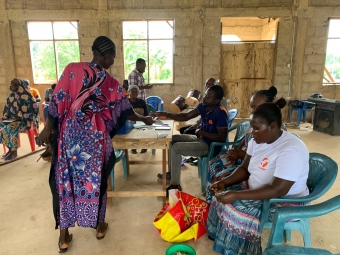
The story of the Sefwi-Wiawso and Juabeso-Bia landscapes shows how the WL and MoMo4C programmes complemented each other to create a lasting impact. While WL tackled structural issues related to knowledge, regulations and policies, MoMo4C focussed on improving farmers access to finance. Building on these achievements, we are now helping VSLAs transition into formal cooperatives, which can offer larger loans, lower risks, and better access to markets and financial services. We believe this will be key to further scale sustainable agroforestry, strengthening farmers’ resilience in Ghana’s cocoa landscapes.