News
Our stories ... ...
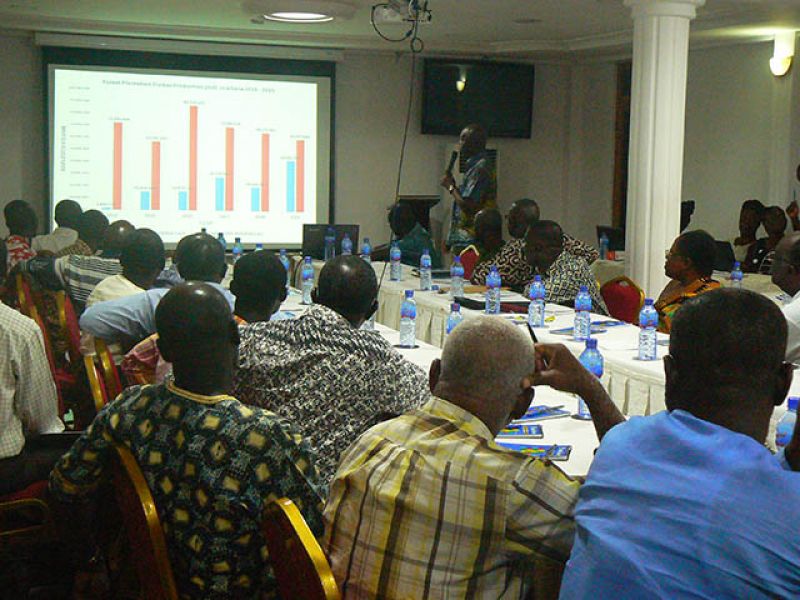
Ghana - 30 November, 2015
Destruction of tree saplings as a result of cattle grazing by Fulani herdsmen constitutes a major drawback to tree plantation development in Ghana, the Forest Services Department (FSD) of the Forestry Commission (FC) has announced at a Tree Growers Association Workshop organised by Tropenbos International (TBI) Ghana in Kumasi on November 13, 2015.
Fulani herdsmen are a non-Ghanaian nomadic ethnic group whose main source of livelihood for many generations has been cattle rearing and who still graze their cattle across countries in West Africa at whatever locations they can find grass.
Outlining some key challenges to the successful implementation of the ‘Ghana Forest Plantation Strategy 2015-2040’, Mr. Hugh Brown, Director of Operations, Plantations, of the FSD said the destruction of tree plantations is not limited to the cattle trampling on and feeding on the saplings but also as a result of the forest fires created by these herdsmen in their desire to create a conducive environment for cattle ranching.
The one-day workshop which was organised as part of activities of the Landscape Restoration Programme (LRP) being run by TBI Ghana was under the theme “Improving the contribution of tree grower associations to forest plantation development in Ghana”.
Sixty participants comprising tree growers, farmers, researchers, scientists, traditional authorities and policy makers attended the workshop which sought to explore the potential for building strong tree grower associations and also improve the contributions of such associations to plantation development.
Mr Brown called upon the Ghana Government to seriously tackle the “Fulani menace” as a matter of urgency if it wants its Forest Plantation Strategy to be successful since the main aim of the Fulani herdsmen is to convert forests into rangelands through repeated forest fires.
Other challenges facing the implementation of the Forest Plantation Strategy are the use of inferior planting materials, the low capacity of field officers in the application of best practises in commercial forest plantation development and the unavailability of certified seeds.
In addition, the lack of support systems such as a well-structured extension service system, a specialised market where investors can sell and buy forest plantations, difficulties in accessing long term loans, and inadequate information on investment climate with regards to processes and regulations all undermine efforts at plantation development.
All these challenges are further aggravated by the long and contorted process of land acquisition for commercial forest plantations, the high incidence of bush fires, especially, along the savannah and transitional zones, inadequate logistics for FSD staff to undertake effective monitoring and supervision of plantation activities and also provide extension services, and the irregular release of funds for plantation establishment and maintenance which in most cases are insufficient.
Even when farmers have successfully established their plantations, other issues such as the low capacity for maintenance, servicing and repair of machinery at the local level and the non-availability of plantation contractors to undertake specialised tasks such as pruning, marking and thinning of trees, all serve to undermine their efforts.
Key interventions for stepping up plantation development in Ghana include the establishment of land banks on both on-reserve and off-reserve forests to make land readily available to farmers, the provision of at least two million seedlings to farmers and small holder tree plantation growers annually, and the promotion of trees on farms through boundary planting and agro-forestry.
Other interventions include the provision of extension services to tree plantations farmers and the publication of a Forest Investor Handbook to guide people interested in investing in tree plantation development.