News
Our stories ... ...
Colombia - 03 July, 2014
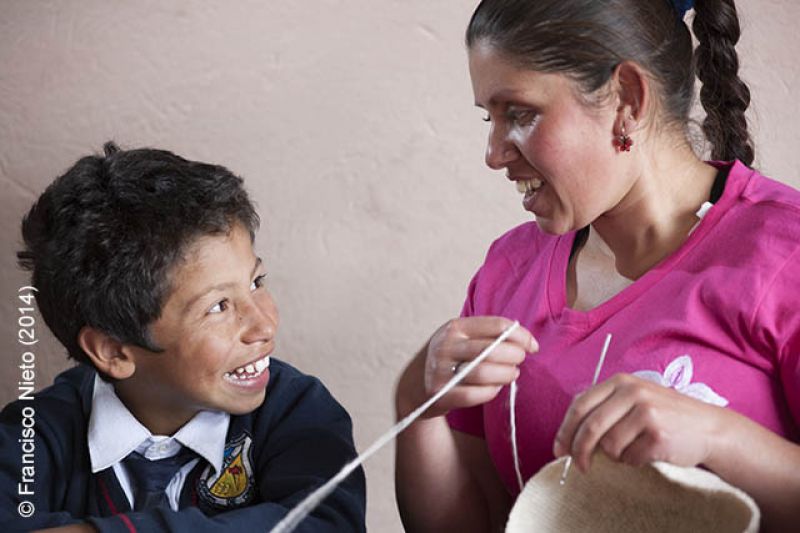
The campesino women from the Mortiño region in Colombia have created a dialogue platform to talk about about their community, their territory and the relevance of their actions for the regional development. This is how the weaving and embroidery afternoons that began a year ago are understood: they not only promote the discussion about the role of women in the páramos, but also rescue the knowledge related to the biological diversity of this ecosystem through the careful representation of orchids, frailejones and plants in general.
Often the páramo regions are thought as empty lands, but that is far from true, the Andean high mountains are inhabited by thousands of campesino and indigenous communities. According to recent studies from the Alexander von Humboldt Institute, around 120,000 people have arrived there either displaced by violence or as part of national campaigns aiming the colonization of “uncultivated lands”. Survival in this ecosystem requires a very hard way of living; therefore the people from the páramo’s are considered tough, pioneer and hardworking, with high levels of adaptability to unfavourable conditions. Campesinos in the paramos are currently facing several threats, both at environmental (climate change) and legislative levels (land use restrictions), which invite them to revise their productive processes and to find new alternatives adapted to the new environmental and cultural situation.
Against this background, the women’s embroidery organization from the Guerrero páramo is exploring alternative forms of life that increase their capacity to respond to climate change and upcoming socio-economic challenges. The pieces produced may be considered handicrafts that portray the patience and care of women born in this region. They are also a reflection of a high mountain culture that needs to be included in many debates at an urban and regional level.
The Mortiño area is located in the department of Cundinamarca, at the source of many rivers that provide water to rural and urban settlements in the Municipality of Carmen de Carupa and that flow into the Fúquene Lake. In the project Communities in the páramos, TBI Colombia develops activities for the inclusion of communities, especially women organizations, in the design of management strategies for conservation and the development of constructive socio-economic views in this region related to climate change. The weaving and embroidering group of women from Mortiño is an organizational process that gathers young women, mothers and grandmothers interested in the sustainability of their families and territories, and looking for a better quality of life based on innovation and cooperative work. From this perspective women play a key role in the future of high mountain communities.
Photo credits: Francisco Nieto (2014). Proyecto Comunidades de Páramo, Adaptación al Cambio Climático. UICN Sur- TBI Colombia